For B2B buyers, the car charger category is becoming less about adding another “fast charge” SKU and more about building a reliable vehicle-power product that can be specified, tested, labelled and supported with confidence. The visible changes are familiar—more USB-C ports, higher advertised power and multi-device charging—but the purchasing implications are deeper. A buyer now needs to confirm the complete power architecture, not just the peak wattage printed on a box.
The most important 2026 trend is therefore not a single connector or power number. It is the move from generic charger claims to evidence-based product definition. Distributors and private-label brands that define ports, output behavior, cable assumptions, target market, packaging and quality checks before they request a quotation are better positioned to compare suppliers and reduce post-launch returns.
Executive takeaway: The strongest car charger OEM programs in 2026 will be built around five disciplines: USB-C-aware product planning, transparent multi-port power allocation, model-specific compliance evidence, vehicle-environment reliability, and packaging/support designed for the actual sales channel.
Trend 1: USB-C has become a planning baseline, not a shortcut to a product claim
USB-C is increasingly central to the device ecosystem that vehicle chargers serve. The European Commission states that its common-charger rules require USB-C charging support for specified categories of new portable electronic devices sold in the EU, with laptops added from 28 April 2026.1 The published list concerns devices such as phones, tablets, cameras, headphones, portable speakers and navigation equipment; it does not mean that every vehicle charger is automatically subject to the same rule. The commercial implication for a car charger OEM buyer is indirect but important: a larger installed base of USB-C-chargeable devices raises the value of clear USB-C output, cable and compatibility information.
A useful RFQ should therefore state more than “USB-C car charger.” It should define the number of ports, intended device mix, output expectation per port, total output when several ports are active, cable bundle and any expected charging-protocol behavior. This helps prevent a common sourcing failure: two suppliers quote physically similar chargers whose simultaneous-use performance is materially different.
Instead of asking | Ask this question |
“Do you have a fast car charger?” | “Please quote a two-port model with the required output profile for single-port and simultaneous use, and identify the exact configuration.” |
“Does it support USB-C?” | “Which USB-C port behavior, supported protocols, cable assumptions and device tests apply to the quoted version?” |
“Can you include a cable?” | “Which cable type, length, rating, connector combination and packaging position are included in the quoted SKU?” |
“Is it suitable for Europe?” | “For this exact model and our target markets, what product-specific documentation, labelling and evidence are available?” |
For procurement teams, the distinction matters because a connector is only one element of the user experience. The buyer must still verify the negotiated power, the actual cable, the host device, the thermal behavior and the end-user instructions.
Trend 2: Peak watts matter less than power allocation under real use
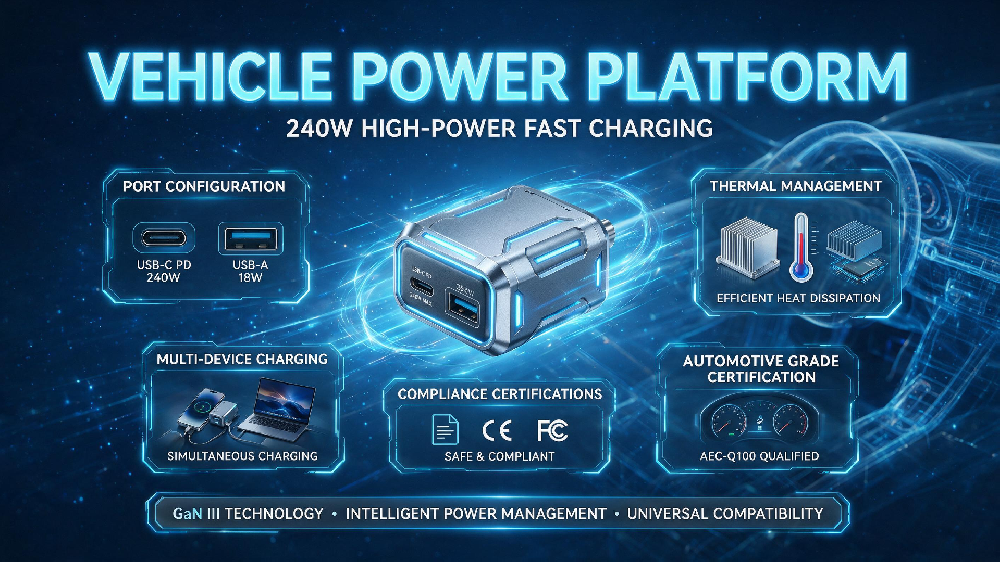
USB Power Delivery continues to expand the range of possible power designs. USB-IF explains that USB PD 3.1 can enable up to 240 W in applications using a full-featured USB Type-C cable and connector under the relevant conditions; it also describes additional fixed voltage levels and more flexible power management.2 This is an important technology direction, but it should not be simplified into the claim that a typical car charger must—or can—deliver 240 W.
For car charger sourcing, power allocation is more useful than a headline number. A buyer needs to know what happens when one phone is connected, when two devices are connected, when a laptop-class device is added, and when the vehicle voltage changes during normal use. The correct product depends on the target channel. A compact retail charger may prioritize two-phone convenience and simple labelling, while a professional accessory program may need a more documented allocation strategy, higher output capability or a different accessory bundle.
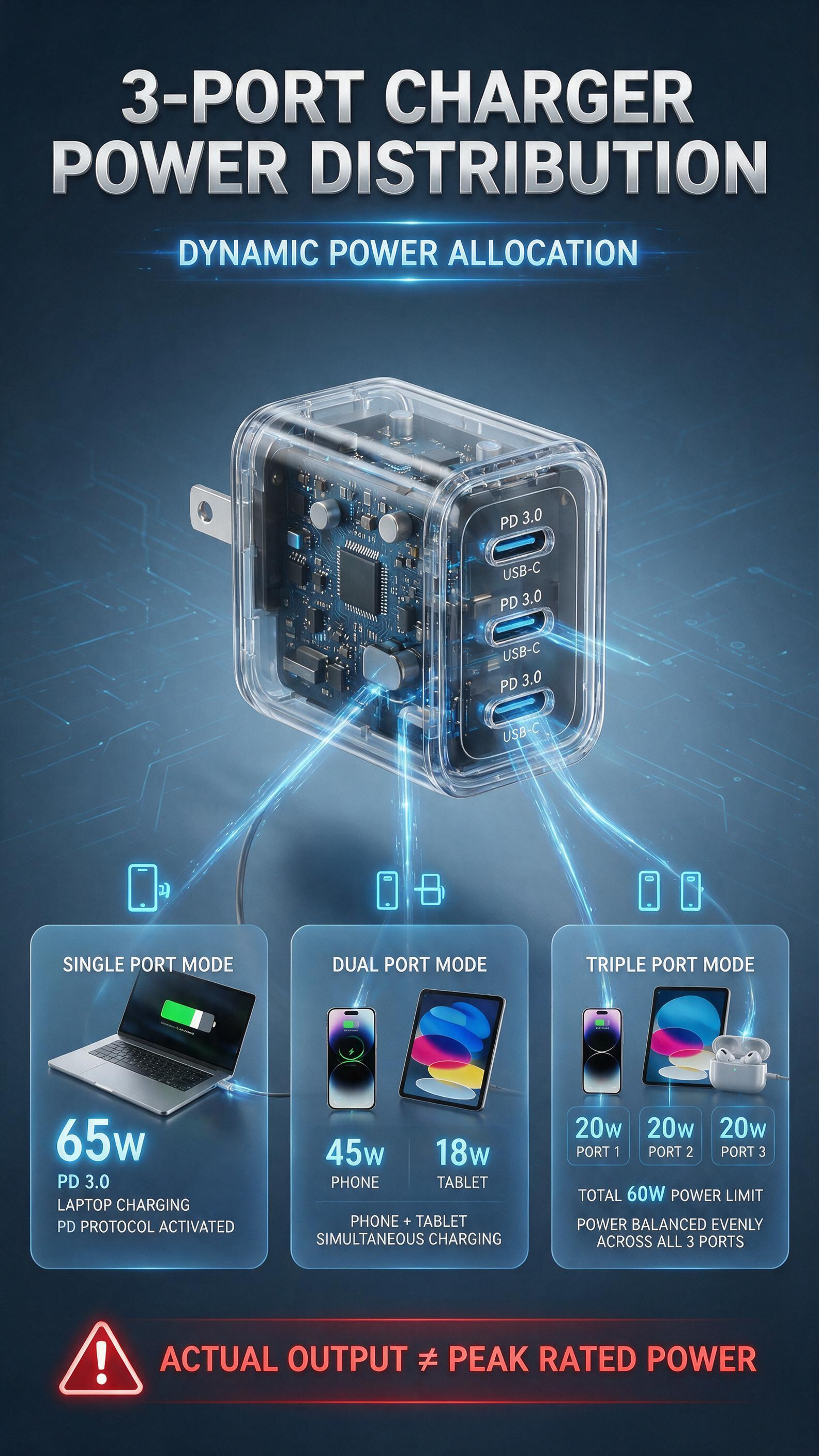
Power-design question | Why it is commercially important | Evidence to request from the OEM supplier |
What is the maximum output of each port used alone? | Defines the single-device value proposition. | Product specification and sample test record. |
What is the total output when all ports are active? | Prevents an end user from assuming each port receives the headline output at the same time. | Output-allocation table and simultaneous-load test. |
Which cable conditions are assumed? | A cable can affect the observable charging result. | Cable specification, included-SKU details and test setup. |
What happens at elevated temperature or extended operation? | Vehicle interiors can create challenging thermal conditions. | Internal test summary, test boundaries and any applicable report. |
What changes between regional versions? | Plug, label, cable, language or document differences can create SKU confusion. | Model code matrix and packaging artwork approval. |
The decision rule is straightforward: market “power” only at the level that the product, test method and bundle can support. If the buyer cannot explain the simultaneous-use behavior in one paragraph, the SKU is not yet ready for a clear B2B quotation or product page.
Trend 3: OEM differentiation is shifting toward configuration control
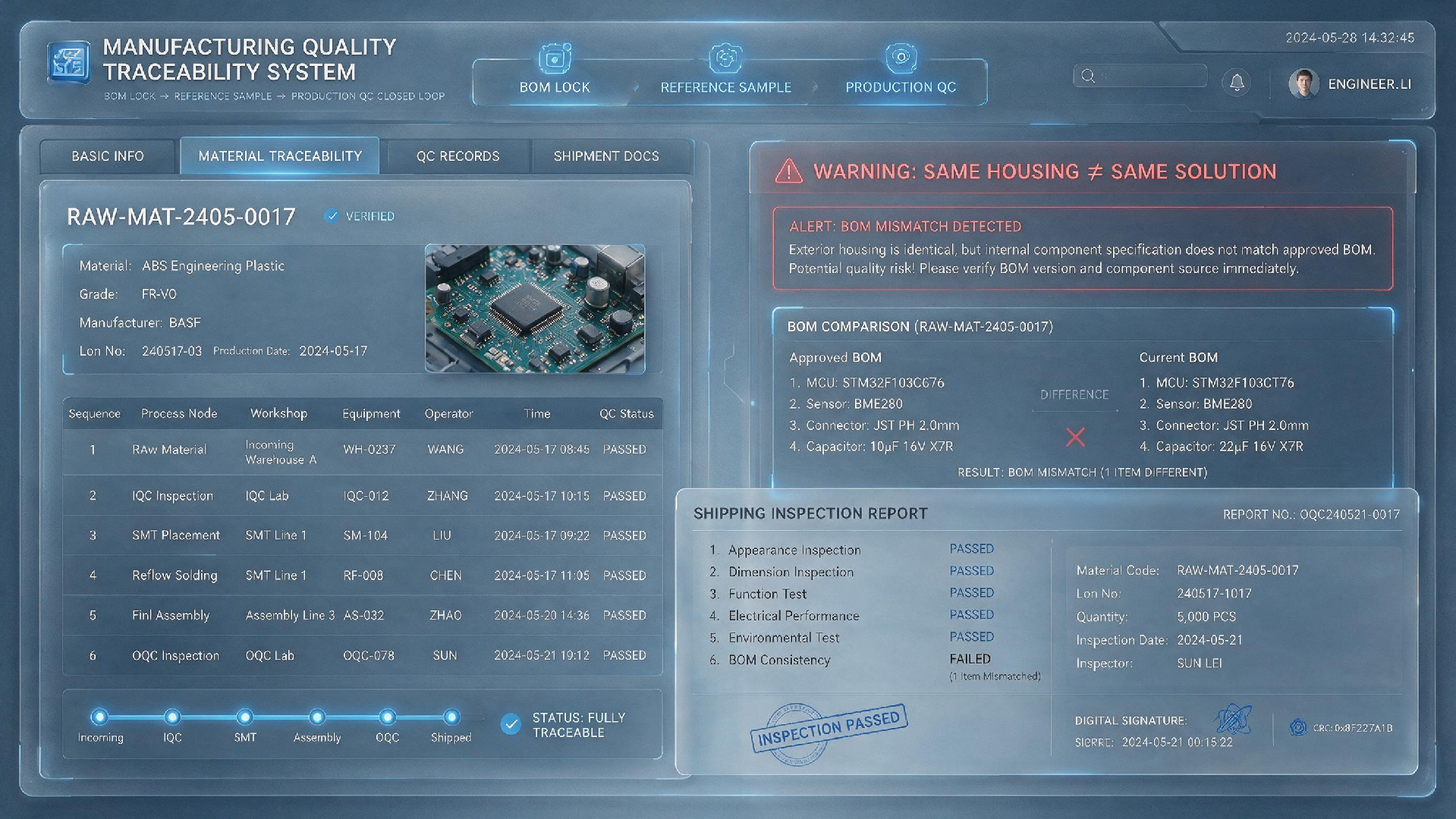
In a mature accessory category, an OEM logo alone is rarely enough to create a durable product program. The higher-value work is configuration control: choosing a product version, locking its bill of materials, defining the cable and packaging, approving label language, agreeing the test plan and controlling changes after the sample is approved.
This is especially important where the product may look identical across suppliers. Two chargers can share a port layout while differing in controller design, output allocation, thermal protection approach, cable quality, printed claims, packaging components and available evidence. A private-label buyer should therefore manage a production reference sample rather than rely on a catalogue image or a generic data sheet.
A production reference sample should record the model code, external finish, port arrangement, output table, cable bundle, approved artwork, firmware where relevant, packaging contents and quality checkpoints. Any later change to these items should trigger a documented review. This approach makes a quotation comparable, simplifies purchase-order language and creates a fact base for the product page.
Trend 4: Compliance evidence must be model-specific and market-specific
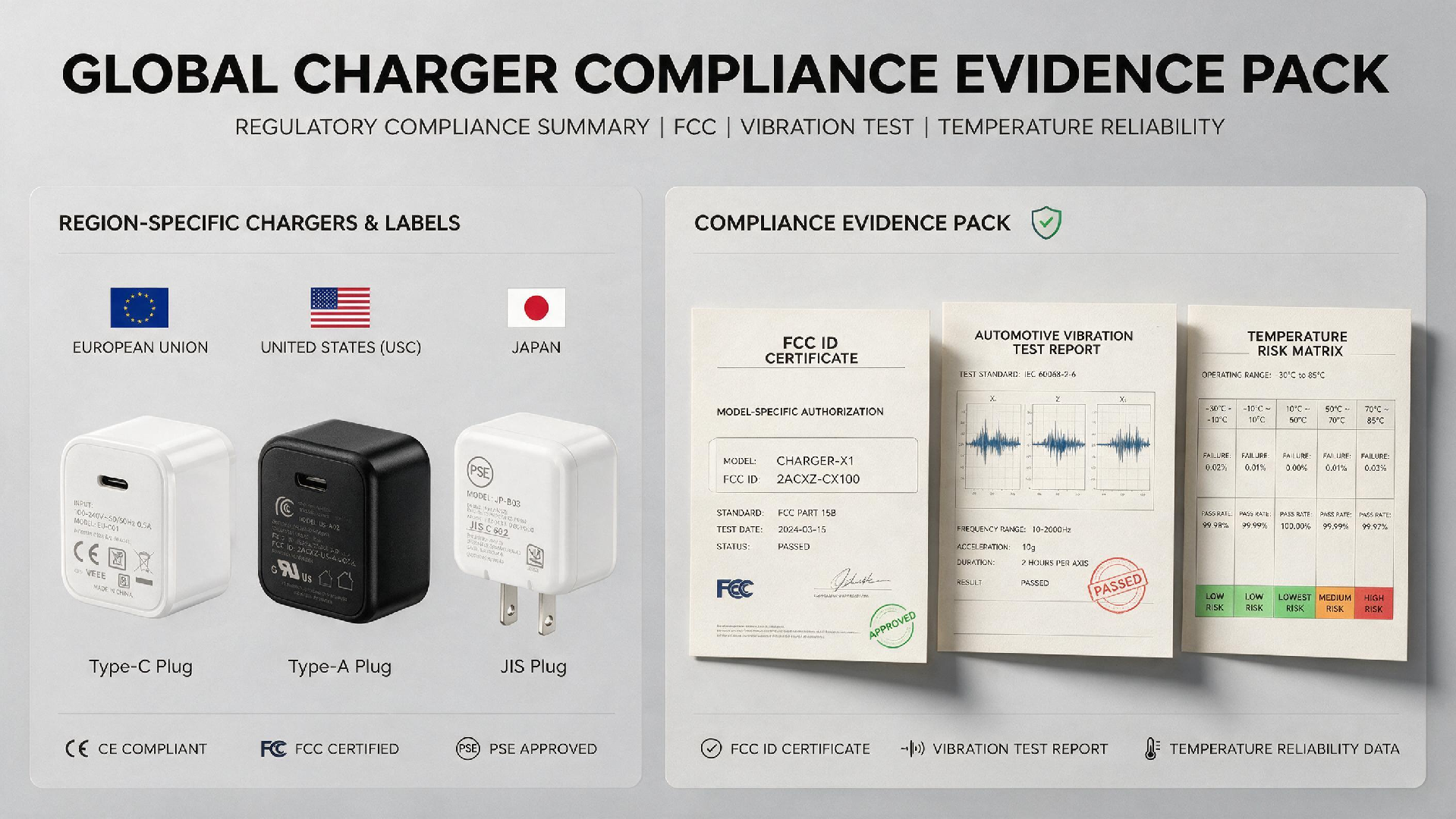
“CE,” “FCC,” “RoHS” and “certified” are often used as short marketing labels. For a responsible OEM program, they are starting points for verification, not substitutes for it.
The EU explains that CE marking applies only where relevant harmonised EU rules require it. The manufacturer is responsible for identifying the applicable requirements, assembling technical documentation and following the appropriate conformity-assessment process before affixing the mark.3 The United States has different rules: the FCC explains that electronic products capable of emitting radio-frequency energy may be subject to applicable equipment-authorization procedures, and the precise path depends on the device’s functions and rules that apply.4
For car chargers, a simple wired product, a product with a digital display and a product incorporating Bluetooth, Wi-Fi or another RF function may need different analysis. The buyer should not treat a document for one product revision as evidence for every product that shares a housing.
Evidence request | What the buyer should verify |
Exact model identity | The model code, hardware version and relevant accessories match the quoted SKU. |
Target market | The document and product claim apply to the destination market, not a different region. |
Scope and date | The test or declaration covers the relevant function and is current enough for the program. |
Responsible entity | The document identifies the appropriate manufacturer, applicant or responsible party. |
Product changes | Any material change in electronics, wireless function, cable, label or configuration is assessed before shipment. |
This is not legal advice, and a brand owner or importer should obtain professional guidance for its own market obligations. It is, however, a practical sourcing standard: the more specific the model and evidence trail, the safer the commercial conversation becomes.
Trend 5: Vehicle-environment reliability is becoming a purchasing topic
A charger is small, but its use environment is demanding. It is installed in a vehicle, repeatedly inserted and removed, used with multiple cable types, exposed to vibration, and sometimes left in high cabin temperatures. These realities make reliability an OEM conversation, not just a warranty conversation.
Rather than publish broad claims such as “high quality” or “premium protection,” a buyer should agree on observable checks. The relevant checklist will vary by model, but it can cover port retention, fit in the intended vehicle socket, power-on behavior, output behavior under the agreed load, display/indicator function, housing appearance, printing durability, cable inclusion and carton protection.
Reliability question | Example of an evidence-based answer |
Will the charger fit our intended vehicle channel? | “We will test the approved sample in the buyer’s representative 12 V/24 V vehicle-socket environment and document the result.” |
How is output behavior checked? | “The agreed load profile and simultaneous-port test will be listed on the QC sheet.” |
What happens if the product changes? | “A component or firmware change that affects the agreed function will be reported before production approval.” |
How do we inspect the shipment? | “The pre-shipment checklist will include model, label, port function, accessories, packaging and carton count.” |
The goal is not to promise that a compact charger can withstand every unknown condition. The goal is to make the conditions, test boundaries and supplier responsibilities understandable before the order is placed.
Trend 6: Packaging, instructions and support now shape the product itself
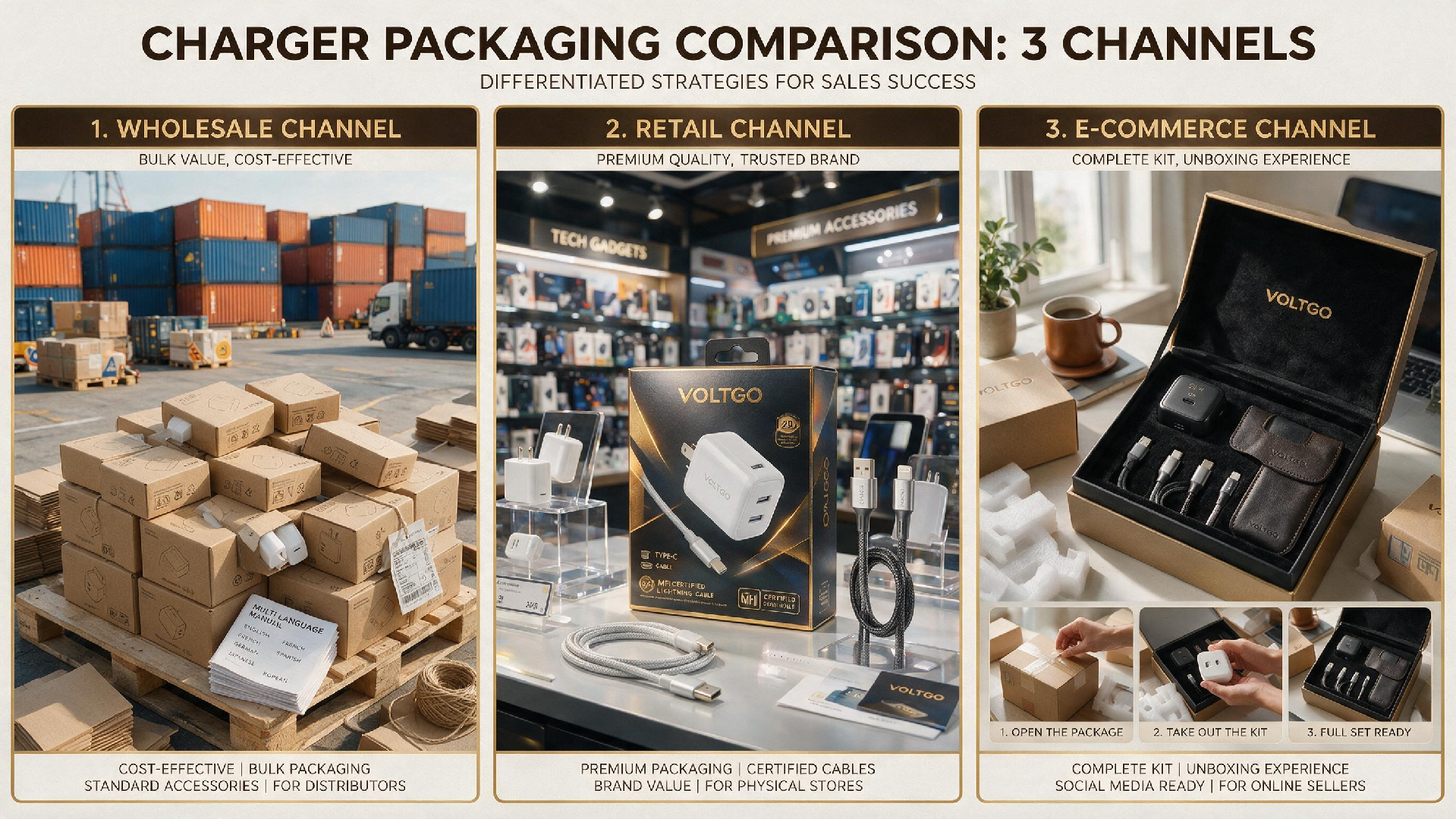
For retail and e-commerce channels, a charger is not experienced only when it delivers power. The buyer sees the box claim, chooses a cable, reads the quick-start card, connects multiple devices and decides whether the result matches the promise. That means packaging and instructions are part of product engineering from a commercial perspective.
A 2026-ready OEM brief should define the display language, product label, box copy, cable information, key output caveats, safety wording, after-sales contact route and barcode requirements. If a product has more than one output mode, the packaging should not imply that every port delivers the same maximum power in every use case.
Clear support materials also reduce avoidable returns. A concise quick-start card can show how to connect the charger, how to identify the ports, what cable is included, how multi-port use is handled and where to seek help. This is more credible than adding another generic “fast charging” claim.
What B2B buyers should change in their next car charger RFQ
The following 90-day action plan turns the trends above into a manageable sourcing process.
Action | Why it matters in 2026 | Deliverable |
Define three channel-specific SKU briefs | A wholesale, retail and e-commerce buyer may need different bundles and claims. | One-page brief per channel. |
Build a port and power-allocation table | Prevents ambiguous “dual fast charge” wording. | Supplier-comparable RFQ table. |
Lock a production reference sample | Makes configuration changes visible before mass production. | Dated sample approval sheet. |
Create a model-specific evidence folder | Keeps documents, reports, labels and product facts connected to the SKU. | Folder indexed by model and version. |
Add a vehicle-use QC checklist | Translates reliability into observable checks. | Approved pre-shipment inspection list. |
Rewrite packaging claims in plain language | Reduces overclaim risk and customer confusion. | Approved product/box copy. |
Publish buyer education beside the product page | Builds trust and gives search/AI systems useful procurement context. | One guide, one product page and one RFQ CTA linked together. |
Frequently asked questions
What is the biggest car charger OEM trend in 2026?
The biggest trend is a move from generic fast-charging claims to verifiable power architecture. Buyers increasingly need clear port configuration, single-port and multi-port behavior, cable assumptions, product-version control and market-specific evidence.
Does USB PD 3.1 mean every car charger should offer 240 W?
No. USB-IF describes PD 3.1 as enabling up to 240 W under relevant conditions with a full-featured USB Type-C cable and connector.2 The correct car charger design depends on vehicle input, target devices, port strategy, thermal design, cable bundle and channel requirements. A buyer should select the power design that can be accurately specified and tested for the intended SKU.
Do EU common-charger rules directly regulate every car charger?
The European Commission’s published announcement addresses USB-C charging support for specified portable electronic-device categories sold in the EU.1 It does not list vehicle chargers as one of those categories. Nevertheless, the rule strengthens the practical importance of USB-C compatibility in the device ecosystem that car chargers serve. Buyers should obtain market-specific compliance advice for the exact product they plan to sell.
What should a private-label brand request before approving a charger sample?
At minimum, request the exact model/configuration, output table, cable and accessory list, target-market labels, packaging artwork, available model-specific evidence, an agreed quality-control checklist, and a dated production reference sample. If the product includes a wireless or RF function, confirm the relevant market pathway for the actual device revision rather than relying on a generic document.4
How can a product page support both conversions and GEO?
Use factual, visible information: a clear product name, structured specification table, multi-port behavior, included bundle, OEM options, evidence boundaries, real FAQs and an RFQ CTA. Link it to a detailed buyer guide such as this one. Search and AI systems can more readily reference content that is clear, specific, consistent and supported by evidence than generic marketing language.5
Conclusion: Build a charger program that can be explained
The car charger market will continue to reward compact designs and faster charging, but B2B success will depend on what happens behind the headline: whether the output is understood, the configuration is controlled, the evidence matches the model, the product fits its vehicle-use context and the sales promise is clear.
For distributors and private-label brands, the opportunity is to convert these technical details into a better buying process. Start with a defined channel, a practical power-allocation table, a verified sample and an RFQ that asks for evidence. Then make the product page say exactly what the approved product can do—no more and no less.
To discuss a car charger program, share your target market, desired port configuration, required bundle, branding scope and expected order volume through the Tosheart Contact page.
Editor verification before publication
Before publishing this article, the Tosheart team must replace the author/reviewer/date fields and verify that every internal link is live. If the company adds any product-specific figure, protocol, certification, MOQ, lead time, test result or warranty term, it must be confirmed in the relevant product fact card and reflected consistently in the product-page schema. Remove this editor-verification section after completing the check.