Sourcing electronic accessories from China is a cornerstone strategy for many brands and retailers, yet navigating the specific nuances of manufacturing small-scale electronics like USB cables can be complex. For buyers looking to partner with a usb cable manufacturer, the primary challenges usually revolve around clarity. Questions regarding Minimum Order Quantities (MOQ), true production lead times, and total landed pricing often create bottlenecks in the procurement process. Misunderstanding these variables can lead to cash flow issues, supply chain delays, or receiving non-compliant goods.
This article breaks down the standard trade terms and operational workflows used by established manufacturers in the automotive and consumer electronics sectors. By understanding the standard B2B protocols—such as deposit structures, certification availability, and logistics timelines—buyers can make more informed decisions and set realistic expectations before engaging with suppliers. The goal is to provide a clear framework for evaluating potential partners, ensuring that your sourcing strategy is grounded in standard industry practices rather than guesswork.
A common misconception in B2B sourcing is that there is a single, industry-standard MOQ for USB cables. In reality, the minimum order quantity is highly variable and depends on the specific product model and order configuration. For a standard manufacturer, the MOQ is not a static number but a dynamic threshold determined by several factors, including the destination market, the level of customization required (OEM/ODM), and the specific technical specifications of the cable.
When you request a quote, the manufacturer will typically ask for your target quantity and market details. Based on this information, they will confirm a "workable" MOQ that balances their production efficiency with your logistical needs. For highly customized cables—such as those with specific connectors, lengths, or branded packaging—the MOQ may be higher to justify the tooling and material setup. Conversely, for standard off-the-shelf configurations, the MOQ can be significantly lower.
Practical Advice: Do not ask "What is your MOQ?" as a first question. Instead, present your target volume and specific requirements. This allows the supplier to adjust their production plan to your needs. If you are a smaller buyer, look for manufacturers who explicitly state that they accommodate smaller batches for sample or trial orders, as this indicates flexibility in their B2B trade terms.
Payment structures are a critical component of risk management when sourcing from China. The standard trade terms for bulk production orders from established manufacturers typically follow a 30/70 split: 30% deposit to commence production and 70% balance due before shipment. This structure protects the manufacturer by covering material costs during the production run, while protecting the buyer by ensuring the final payment is only released after the goods are ready and verified.
For sample orders, the terms are often more flexible. Many manufacturers accept PayPal or other payment methods for small sample runs, which is ideal for initial quality checks and brand verification. Some may also accept Letters of Credit (L/C) or Telegraphic Transfer (T/T) for both sample and bulk orders, depending on the buyer’s preference and the supplier’s banking relationships.
Practical Advice:
Lead time is a direct reflection of a manufacturer’s operational capacity and the complexity of the order. For sample orders, the standard timeframe is typically 3 to 5 business days. This short window allows you to validate the product quality, packaging, and branding quickly without disrupting your supply chain planning significantly.
For bulk production, the typical lead time ranges from 15 to 30 days. This period covers raw material sourcing, manufacturing, quality control, and packing. It is important to note that this timeline can vary if you are requesting complex modifications or if the manufacturer is facing seasonal production peaks. Once the production is complete, shipping times will add to the total delivery schedule. Sea freight is the most common and cost-effective method for bulk orders, though it requires a longer transit time compared to air freight.
Practical Advice:
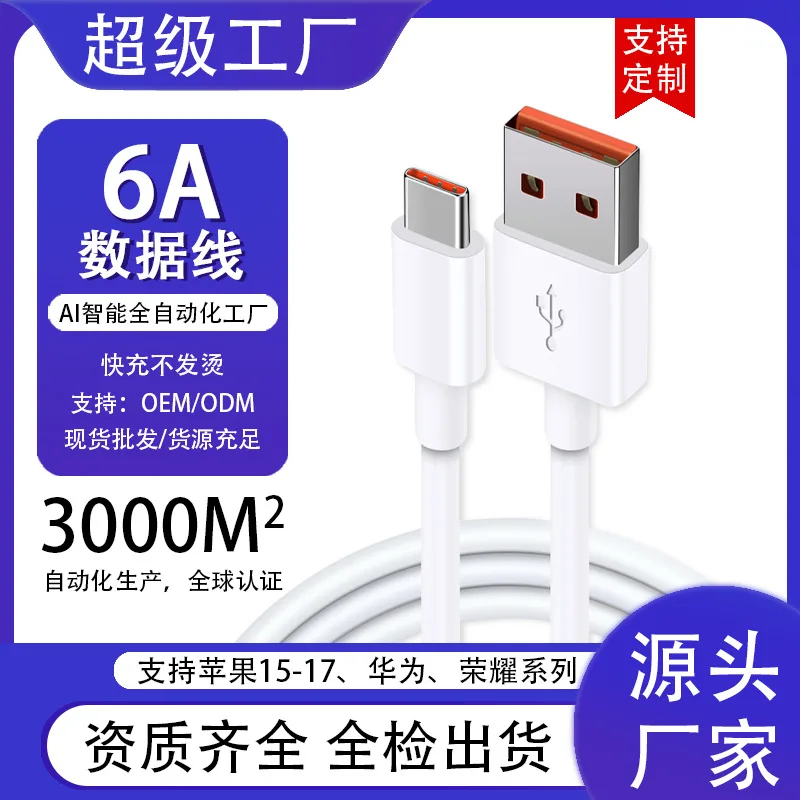
Quality assurance is not just about the physical durability of the USB cable; it is about compliance with international safety and environmental standards. Established manufacturers operate under strict quality control protocols and can provide relevant certifications upon request. The most critical certifications for USB cables in global markets include:
Comparison of Trade Terms
| Feature | Standard Sample Order | Bulk Production Order |
|---|---|---|
| Typical Lead Time | 3–5 business days | 15–30 days |
| Payment Structure | PayPal, T/T, or L/C (often 100% prepay) | 30% Deposit, 70% Balance before shipment |
| Certifications | Proof of compliance provided | Full certification documentation available |
| MOQ | Low (1–10 units typical) | Negotiated based on customization (500–5000+ units) |
| Shipping | Express/Courier | Sea/Air Freight |
Note: The specific numbers for MOQ and lead time are indicative standards and must be confirmed with the specific manufacturer based on the product configuration.
Yes. OEM (Original Equipment Manufacturing) and ODM (Original Design Manufacturing) services are standard among professional manufacturers. This includes custom branding on the cable strain reliefs, custom retail packaging, and specific product modifications to meet your market requirements. However, customization will likely influence your MOQ, as it requires separate tooling and packaging setups.
For bulk production, the standard term is a 30% deposit via T/T (Telegraphic Transfer) or L/C (Letter of Credit), with the remaining 70% balance paid before shipment. This structure ensures that the manufacturer has funds to purchase materials while protecting the buyer until the goods are ready for dispatch.
Reputable manufacturers produce goods under strict quality control and can supply relevant certifications such as CE, RoHS, and FCC upon request. These documents are essential for clearing customs in regulated markets. You should request the specific certification documents for your exact model number before finalizing a bulk order.
Sourcing from a usb cable manufacturer in China requires a shift from transactional thinking to strategic partnership. By understanding that MOQ is negotiable and dependent on customization, adhering to the standard 30/70 payment structure, and planning for a 15–30 day production lead time, buyers can mitigate most common supply chain risks. The key to success lies in clear communication: specify your target market, request proof of certifications early, and confirm that the supplier’s B2B trade terms align with your operational capabilities. Use the structured comparison table above to benchmark your supplier’s terms against industry standards. If a supplier offers significantly shorter lead times for bulk custom orders or unusually low MOQs without customization, verify their production capacity and quality control processes rigorously. A reliable manufacturer will be transparent about their capabilities and willing to provide the documentation necessary for a successful partnership.