The global automotive electronics market has shifted from simple power provision to sophisticated fast-charging ecosystems. For distributors, wholesalers, and retail buyers, navigating the car charger wholesale price list is no longer just about finding the lowest unit cost. It is about matching technical specifications with market demand while ensuring product reliability. Many buyers face confusion when comparing products that look similar on the surface but differ vastly in internal components, safety certifications, and charging efficiency.
This guide breaks down the factors that drive pricing in the car charger wholesale sector. It moves beyond generic quotes to explain how specific features—such as dual-port fast charging, digital battery level displays, and universal 12V/24V compatibility—impact the final cost. By understanding the technical and commercial variables, buyers can make informed decisions, negotiate better terms, and select products that minimize return rates and maximize customer satisfaction in their local markets.
The primary driver of price variation in wholesale car chargers is the charging technology and output capability. Not all chargers are created equal; the internal architecture determines both performance and manufacturing complexity.
Modern smartphones and tablets require specific handshake protocols to negotiate higher voltages and currents. A standard 5V/2A charger is a commodity product with low margins. In contrast, chargers supporting intelligent ID recognition for brands like Huawei, Xiaomi, OPPO, and others often command a premium price. These chargers can dynamically adjust output, potentially reaching up to 12V and 10A per port for compatible devices. Buyers must check if the supplier explicitly states support for specific protocols (such as QC2.0, PD, or proprietary fast-charge systems) to avoid selling "incompatible" products to tech-savvy consumers.
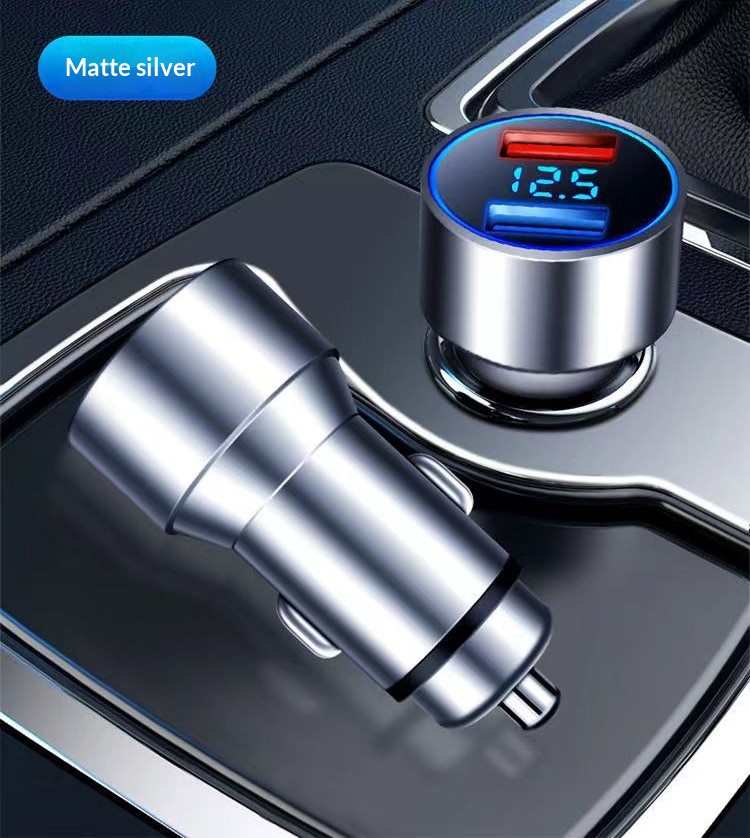
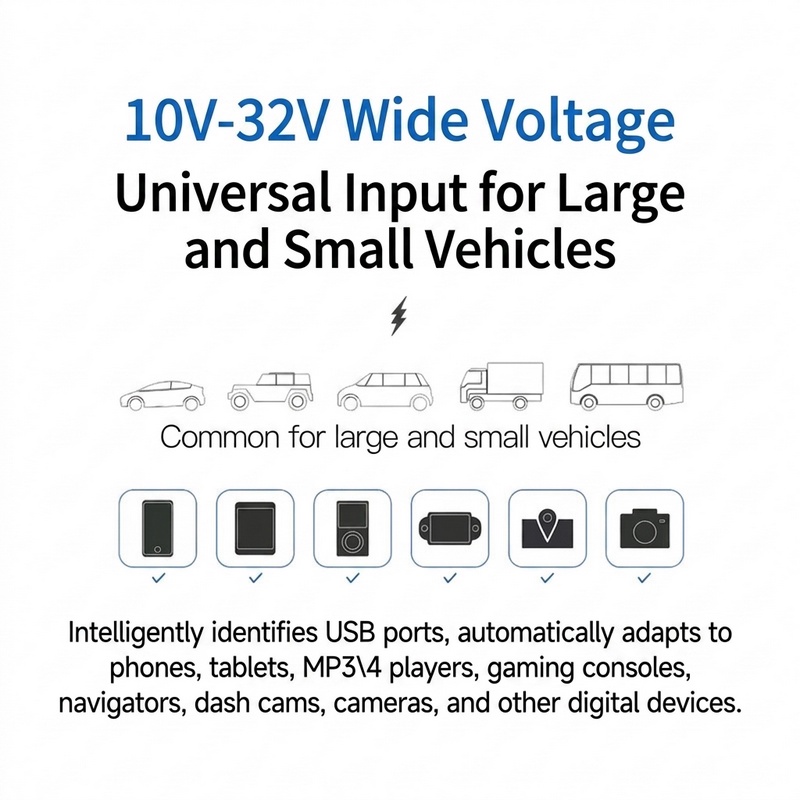
Premium models, such as all-metal dual fast-charge units, include LED digital displays for battery level and voltage. These features add component cost but also enhance perceived value in the retail market. Additionally, the input voltage range is critical for international sales. A universal charger supporting both DC 12V (standard cars/SUVs) and DC 24V (trucks/buses) appeals to a broader B2B audience, including fleet operators and logistics companies, often justifying a higher wholesale price point due to its versatility.
Practical Advice: When reviewing a price list, segment products by tier:
For buyers targeting regulated markets such as the European Union, North America, or the Gulf region, certification is not optional. The cost of non-compliance—including customs hold-ups, recalls, and liability issues—far exceeds the margin difference in certified vs. uncertified stock.
Reputable manufacturers align their production with international export standards. Key certifications to verify include:
The inclusion of these safety mechanisms increases the bill of materials (BOM) cost but is essential for brand trust. When sourcing, request test reports or declarations of conformity for the specific models on your price list. Suppliers who provide "streamlined wholesale supply" often have these documents readily available as part of their B2B service package, indicating a mature quality control process.
Wholesale buyers must consider the end-user experience, particularly regarding installation complexity. Products that require professional wiring lead to higher support costs and customer dissatisfaction. The most attractive B2B products offer plug-and-play functionality.
Top-performing wholesale car chargers are powered directly from the cigarette lighter socket (12V/24V). They feature no external wires or complex installation. For buyers targeting aftermarket audio or GPS market segments, compatibility with existing systems is key. For instance, chargers that support external 12-LED HD reversing cameras or integrate with multi-format media playback (USB drive/TF card) offer higher value-added propositions.
While most chargers are standalone, some premium lines integrate with dash cams or serve as power hubs for multiple devices. The bracket system—whether suction-cup or adhesive—must be reliable. Buyers should look for specifications that mention stable connection and low latency, particularly if the charger is part of a larger automotive electronics suite (like an MP3 player with a built-in phone mount). A seamless user experience reduces warranty claims and boosts repeat business.
The following table outlines typical differences between budget and premium car chargers available from specialized manufacturers. This structure helps buyers quickly assess value propositions when reviewing supplier catalogs.
| Feature | Entry-Level Wholesale Model | Premium / All-Metal Model |
|---|---|---|
| Ports | 1 x USB-A | 2 x USB-A (or USB-C) |
| Max Output | 5V / 2A | 4.5V-12V / 1.5A-10A (Adaptive) |
| Display | None | LED Digital Battery/Voltage |
| Housing | ABS Plastic | All-Metal / Heat-dissipating Alloy |
| Protocols | Standard 5V/2A | Intelligent ID (Huawei, Xiaomi, etc.) |
| Input Range | 12V only | 12V/24V Universal |
| Safety | Basic Fuse | Short-circuit, Over-voltage, Over-current, Over-power, Under-voltage |
| Certifications | Often Local/Basic | CE, FCC, RoHS |
| Target Market | Budget Retail, Emerging Markets | Premium Retail, Fleet Ops, Export Markets |
Note: Pricing for premium models is generally 30-50% higher than entry-level units, reflecting the added components and certification costs. However, the higher retail price point often yields better gross margins for distributors.
Selecting the right supplier is as important as the product spec. Look for manufacturers with a clear B2B partnership model rather than just a trading house.
Ideal partners leverage established supply chain networks to deliver cost-effective mobility solutions. They should be open to working with trading companies and distributors in diverse markets, including Southeast Asia (Malaysia, Singapore, Thailand) and the Middle East (UAE). A supplier’s willingness to discuss long-term reliability and performance consistency is a strong indicator of their commitment to partnership.
Manufacturers that enforce strict quality control aligned with international export standards reduce the risk of defects. Ask about their testing processes. Do they perform end-of-line functional tests? Do they offer samples for validation before mass production? For OEM/ODM clients, the ability to tailor channel collaboration—such as custom branding or packaging—is a key differentiator.
A: Minimum Order Quantities vary by manufacturer and model complexity. For standard entry-level chargers, MOQs may range from 500 to 1,000 units. For premium models with digital displays or specific branding requirements, MOQs are often higher, typically between 2,000 and 5,000 units. Many B2B suppliers are open to discussing trial orders for new partners to validate market fit.
A: The base wholesale price usually refers to the standard white-label or generic-branded product. If you require custom logos, packaging, or specific cable colors, expect a small surcharge or a slightly higher MOQ to cover tooling and printing costs. Suppliers who specialize in OEM/ODM services typically quote a separate "custom development" fee that can be amortized over larger orders.
A: Yes, universal chargers are generally priced higher. The internal circuitry must be designed to handle a wider voltage range without failing, which requires more robust components and stricter testing. However, the versatility allows you to sell a single SKU to both passenger car owners and commercial truck drivers, simplifying your inventory management.
Navigating the car charger wholesale price list requires a shift from a "price-first" approach to a "value-and-reliability" approach. The most successful sourcing strategies prioritize manufacturers who provide transparent technical specifications, rigorous safety certifications (CE/FCC), and flexible B2B partnership models. By selecting products that feature intelligent charging protocols and universal voltage compatibility, you can cater to a wider demographic, including tech-savvy consumers and fleet operators.
To maximize profit and build brand trust, focus on suppliers who offer robust quality control and clear after-sales support. Do not compromise on safety protections or certification documentation, as these are the foundation of a sustainable B2B relationship. Start by requesting sample kits from reputable manufacturers, validate the performance in your local vehicle types, and then secure your long-term supply contract based on demonstrated reliability.